
- A speculative fiction author and editor who lives, writes, and plants trees in the American Southwest.
Readers, thanks for checking out another Author Spotlight Interview. Let’s give a good, hearty welcome to this week’s guest!

Sarena Ulibarri is the author of two science fiction novellas: Another Life (Stelliform Press), about a blood test that reveals past lives, and Steel Tree (Android Press), a science fiction retelling of The Nutcracker.
She has also published nearly 50 short stories, which appear in magazines such as Lightspeed, DreamForge, and Solarpunk Magazine. She serves as a story reviewer for the Imagine 2200 Climate Fiction for Future Ancestors contest, and edited several anthologies featuring international visions of better futures.
Sarena, thanks for agreeing to be here today. Most author spotlight interviews start off with the boring stuff, but I know what readers REALLY want to know.
If you could have any pet (real/fantasy/no-allergies/no worries about feeding it) what would it be?
For a few years when I was a kid, my family raised Nigerian Dwarf Goats, and they are the cutest, silliest creatures on the planet. I wouldn’t want a whole herd, but one or two would be fun to have.
Hmm, I just realized I’m now very close to the same age my parents were when they decided to leave the city behind and try to raise goats and chickens on a Wyoming farm. Urge to follow in their footsteps rising…
I have friends with goats, you should do it! Just remember, they’re herd animals, so you really can’t have just one.
What do you write? And how did you get started?
My niche is solarpunk, which is science fiction that puts a positive spin on the climate crisis by highlighting sustainable solutions and collective action. The short stories I’ve published are all over the map, genre-wise, but my novellas and the anthologies I’ve edited all fall into this category. Solar means “solar energy,” sure, but also any kind of technological or societal change that will lead us to brighter futures. And it’s “punk” because we’re pushing back against the mainstream narrative that only a future of dystopia and destruction awaits, and that there’s nothing we can do about it.
I first discovered solarpunk in about 2014 or 15 by being exposed to some elaborate “green” architecture designs, which sparked my imagination and gave me a fresh approach to writing science fiction. It’s often easy to imagine how everything can go wrong, but it’s a special challenge to imagine how things could go right. In my first attempt at solarpunk, I had to take a step away from Earth in order to imagine that: “Riding in Place” in the anthology Biketopia takes place on an asteroid where people are drafted to mine the minerals that go into solar panels, and one character is telling another about all the beautiful things she misses from Earth.
As I learned more about the creative climate solutions that already exist, but just aren’t being widely implemented, it became a lot easier to write in this sub-genre. My most popular story, “The Spiral Ranch” in DreamForge Magazine (which has also been translated into Italian and Portuguese), imagines a world where the unsustainable beef and dairy industry has been dismantled, but boutique enterprises still exist, like a cattle ranch that’s inside a skyscraper. (This is an architectural design that actually exists and won an award, though I don’t believe it’s been built.) When the cows start disappearing, my character has to figure out who’s behind it, and why.
It’s such a forward-thinking sub-genre.
What do you like to read?
Like a lot of writers, I struggle to find enough time to read for pleasure, largely because I’m always reading unpublished work by my critique group or for slush piles like the Imagine 2200 contest. One way I get around that is by listening to audiobooks while I drive or do laundry.
I tend to alternate between sweeping galactic science fiction like The Expanse series, and snarky, lighthearted urban fantasy like Seanan McGuire’s Incryptid series. Some of my recent favorite paper reads have been A Half-Built Garden by Ruthanna Emrys, Mirrored Heavens by Rebecca Roanhorse (I got an early look at this one!) and Weird Fishes by Rae Mariz.
Loving your read-pile list.
What do you drink when you write/edit?
I write best at coffee shops. Even amid the espresso machines and constant foot traffic, it’s easier for me to concentrate there than at home. The catch is that I don’t even drink coffee, so I have to find the ones with the best teas. A simple green tea is my go-to, but I do love a good matcha latte—provided they can actually make it taste great with a non-dairy milk. (Not everyone can!)
I’m also a non-coffee drinker who enjoys the occasional coffee-shop writing vibe. Or maybe I’m there for the pastries?
Do you snack when you write/edit? What are your favorites!
Ever since I dripped a bit of peanut butter off of my bagel and onto my keyboard, I tend not to snack while I write. (The shift key still sticks a little bit; it’s terribly annoying.)
I’m so sorry for your shift key. And now I want a bagel with peanut butter, I hope you’re happy with yourself.
Name one commonly accepted piece of writing advice that doesn’t work for you
Write every day.
I do try to write every day, but some days simply aren’t writing days. If I’m dealing with a health issue or a life crisis, or I’m hyperfocused on some other task, I’m not going to add to my stress by feeling guilty about not sitting down to write in the midst of that. Besides, sometimes you need a break from the computer (or the notebook, if you’re old school) in order to see your story with a fresh perspective, or think through a plot problem that’s been holding you back.
Indeed! It’s good to make a habit of writing, but life happens.
Name one commonly accepted piece of writing advice they can pry out of your cold, dead hands
Writing is rewriting.
Some stories need more rewriting than others, but nothing has ever sprung fully formed from my forehead. I go over a story again and again before I let anyone look at it, and then I go over it again and again after I’ve gotten feedback. My novella Another Life had at least 14 drafts before it was published, and I honestly think I lost track of the drafts at some point. I’m always striving to make what’s on the page look a little bit closer to what it looks like in my head, but what readers see in their heads is what ultimately matters.
Critique partners are essential for helping me see what I’ve left out or what could be misinterpreted, and revising based on those insights is the most challenging, but also the most rewarding, part.
I have to remind myself of this fact constantly.
Shameless Self-Promotion time!
Steel Tree
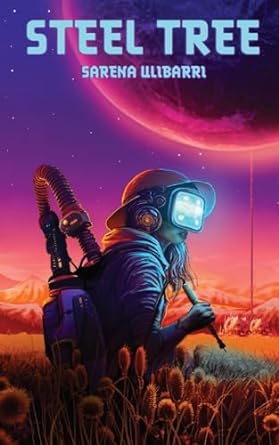
The voyage from Earth to Petipa isn’t cheap, but those who can’t afford it can pay off the trip by working the farms of Eta, the fertile moon that feeds humanity’s new colony. Klara Silber’s parents paid their debt, but left her behind, in charge of the orchards and the android nutcrackers. She’s sure if she follows their example, she’ll earn her invitation to ascend the space elevator and join Petipa Colony in no time. Only, the android nutcrackers have been malfunctioning all season, and some of the other farmers have suddenly gone missing.
They were told Eta didn’t have any native animal life, but the annual winter party is abuzz with rumors of large creatures lurking in the shadows. When one of the party guests inexplicably transforms into a giant rat and goes on the attack, Klara is sure the night can’t get any stranger. That is, until a fairy-like creature who communicates through dance appears, and a whole hidden history unspools about how the humans conquered these alien lands. To prevent the nuts that caused the giant rat mutation from being sent to Petipa, Klara needs to get two very different communities to work in harmony, even if it means she may never earn her way to the colony.
Another Life
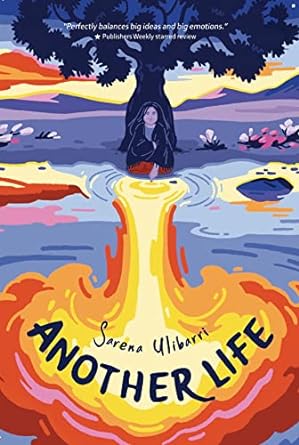
Finding out who you were in a previous life sounds like fun until you’re forced to grapple with the darkness of the past.
Galacia Aguirre is Mediator of Otra Vida, a quasi-utopian city on the shores of a human-made lake in Death Valley. She resolves conflicts within their sustainable money-free society, and keeps the outside world from meddling in their affairs.
When a scientific method of uncovering past lives emerges, Galacia learns she’s the reincarnation of Thomas Ramsey, leader of the Planet B movement, who eschewed fixing climate change in favor of colonizing another planet. Learning her reincarnation result shakes the foundations of Galacia’s identity and her position as Mediator, threatening to undermine the good she’s done in this lifetime.
Fearing a backlash, she keeps the results secret while dealing with her political rival for Mediator, and outsiders who blame Otra Vida for bombings that Galacia is sure they had nothing to do with. But under the unforgiving sun of Death Valley, secrets have a way of coming to light.
Glass and Gardens: Solarpunk Winters

This anthology envisions winters of the future, with stories of scientists working together to protect narwhals from an oil spill, to bring snow back to the mountains of Maine, to preserve ecosystems—even if they have to be under glass domes. They’re stories of regular people rising to extraordinary circumstances to survive extreme winter weather, to fix a threat to their community’s energy source, to save a living city from a deep-rooted sickness.
Some take place after an environmental catastrophe, with luxury resorts and military bases and mafia strongholds transformed into sustainable communes; others rethink the way we could organize cities, using skybridges and seascrapers and constructed islands to adapt to the changes of the Anthropocene. Even when the nights are long, the future is bright in these seventeen diverse tales.
Check out Sarena Ulibarri across the web!
Website | Mastodon| Instagram | BookBub | BSky | Goodreads | Amazon

 WRITING TIPS & WRITERLY MUSINGS